
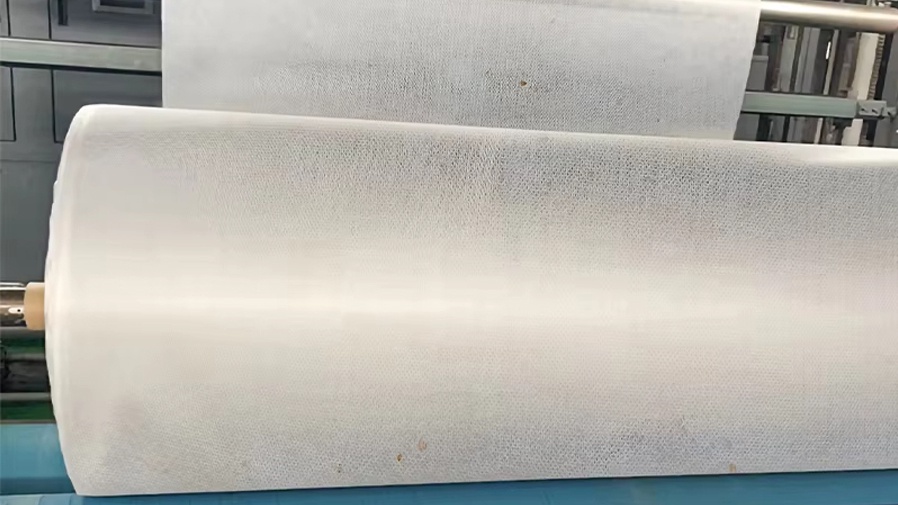
Non-woven fabric, an environmentally friendly material, is gradually becoming part of our daily lives. With its unique properties and diverse applications, it plays an increasingly important role in various fields. Let's unveil the mysteries of non-woven fabric and explore its charm.
Environmentally Friendly Properties
Non-woven fabric, a leading environmentally friendly material, is leading to the trend of green living. We are committed to exploring the possibilities of non-woven fabrics, using our innovative spirit and professional expertise to create first-class products and build a first-class company. Let us contribute to the cause of green environmental protection and lead the industry forward. In this wave of green living, non-woven fabrics stand out among green materials with their unique environmentally friendly properties, becoming a leader in green materials. We continue to explore more applications for non-woven fabrics, using our innovative spirit and professional expertise to create high-quality, high-performance products, contributing to the development of green environmental protection.
Manufacturing Process
Non-woven fabrics, also known as nonwovens or non-woven fabrics, have attracted attention for their unique manufacturing process and environmentally friendly properties. Instead of spinning or weaving, they are simply formed by aligning or randomly arranging textile staple fibers or filaments, then bonding them mechanically, thermally, or chemically to create a web structure. This material is not only moisture-resistant, breathable, and flexible, but also lightweight, non-combustible, and easily decomposable. It is also non-toxic, non-irritating, and available in a variety of colors, inexpensive, and recyclable, making it a truly environmentally friendly material. Non-woven fabrics are manufactured through processes such as melt spinning, weaving, and hot-pressing, resulting in superior performance compared to traditional fabrics at an affordable price.
Material Recycling and Ecological Contribution
Non-woven fabrics are made from polypropylene (PP) pellets through a series of continuous processes, including high-temperature melting, spinning, weaving, and hot-pressing. Despite being called "fabric," non-woven fabrics are not woven. Instead, they are made by mixing chemical and plant fibers in a water or air suspension medium on a wet or dry papermaking machine. This material not only resembles cloth in appearance but also exhibits numerous performance advantages, such as excellent strength, breathability, waterproofing, environmental friendliness, non-toxicity, flexibility, and durability. It is also affordable and recyclable, making it a truly green and environmentally friendly material. Unlike traditional fabrics, nonwoven fabrics are recyclable and have a short decomposition lifespan, contributing to ecological protection.
Thank you very much for writing to us. Please leave your message and contact information, we will reply to you within 24 hours.