
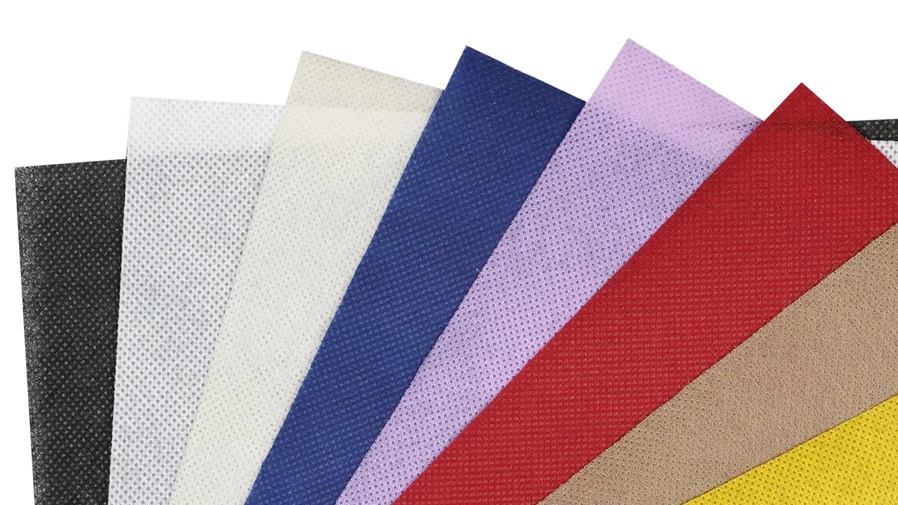
Diversified Applications
As an environmentally friendly and efficient textile product, nonwoven fabrics have a wide range of applications. In the medical and sanitary fields, nonwoven fabrics are widely used in medical supplies such as surgical gowns, protective clothing, sterilization wraps, and masks, as well as in daily hygiene products such as diapers, household rags, and wipes. Furthermore, they are often used in home decoration, such as wall coverings, bed sheets, and tablecloths, adding beauty and comfort to the home environment. Nonwoven fabrics also play an important role in the clothing industry, such as linings, fusible interlinings, and wadding, providing essential support and comfort for clothing. In the industrial field, nonwoven fabrics are used as filter materials and insulation materials, providing essential support for industrial production. In addition, agricultural nonwovens, such as crop protection fabrics and seedling cloths, also play a significant role in protecting crops and increasing yields. Furthermore, nonwovens have many other applications, such as space cotton and thermal insulation and sound insulation materials, bringing convenience and comfort to various fields.
Industry and Market Trends
With the continuous advancement of technology, nonwoven fabric weaving processes have also achieved significant development. Traditional weaving methods have been gradually replaced by more efficient and environmentally friendly processes. Today, nonwoven production processes are becoming more intelligent and automated, not only improving production efficiency but also reducing energy consumption and environmental pollution. At the same time, the research and development and application of new materials have further promoted innovation and progress in the nonwoven fabric industry, expanding its application in a variety of fields.
Future Development Prospects
Non-woven fabrics, a new type of covering material, are often distinguished by their weight per square meter, such as 20g non-woven fabric and 30g non-woven fabric. Their light transmittance gradually decreases with increasing thickness. For example, the light transmittance of 16g/m2 white non-woven fabric is as high as 85.6%, while that of 30g/m2 drops to approximately 60%. In the agricultural sector, the breathability of agricultural non-woven fabrics decreases with increasing thickness but is also affected by external wind speed and temperature differences. Breathability increases with increasing wind speed and temperature differences. Furthermore, the thermal insulation effect of non-woven fabrics is not only affected by their thickness and mesh size, but also closely related to external factors such as weather and covering method. In winter, when the outside temperature drops, the thermal insulation effect of non-woven fabrics is more pronounced, especially when used as coverings in greenhouses.
Thank you very much for writing to us. Please leave your message and contact information, we will reply to you within 24 hours.