
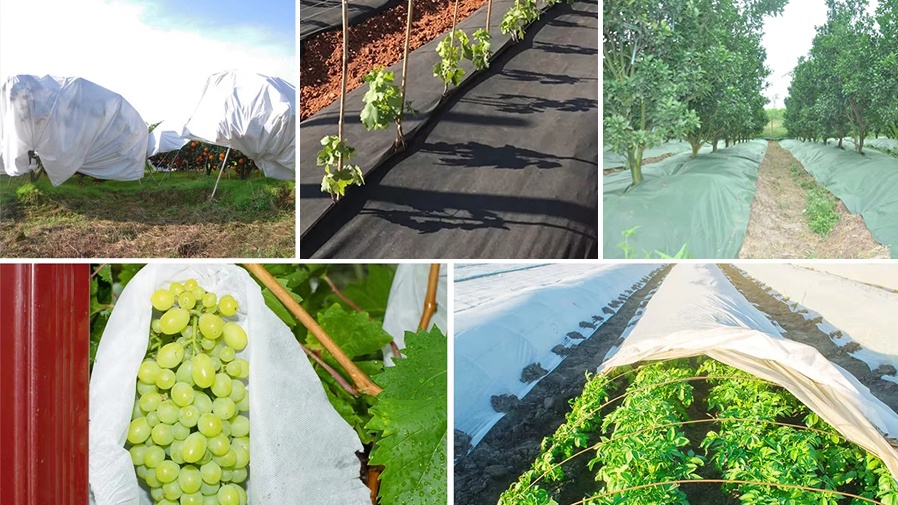
Are you interested in making wholesale non-woven fabric a part of your agriculture business? Non-woven fabrics have many benefits that make them the ideal sustainable choice for meeting various crop production needs. Learn about how to use these fabrics and how they can benefit your business.
What is Non-Woven Fabric?
Non-woven fabric is a type of material created from fibers that are bonded together by mechanical thermal, or chemical processes. This type of material does not go through a weaving process and instead is made from fibers randomly arranged and held together with binders. Non-woven fabric can resist water, air, and bacteria, making it the ideal choice for sustainable agriculture.
Benefits of Using Non-Woven Fabric in Agriculture.
Non-woven fabric has a wide range of benefits when it comes to sustainable agriculture. It is durable, can help control erosion, and is resistant to water, air and bacteria. By using non-woven fabric in your agricultural business. You can not only help protect the environment by reducing chemical usage and waste production, but also save money on equipment costs compared to woven fabrics such as cotton or linen.
Considerations When Choosing Non-Woven Fabric for Agriculture Use.
Before using non-woven fabric in your agriculture business, you should consider several important factors. To ensure it provides you with optimal coverage and protection from the elements. You ’Il needs to select a fabric that is dense enough for your needs and has the proper weight. It will also be important to check for products with anti-mildew properties that resist microbes, high UV ratings and other characteristics that apply to your particular application. Additionally, non-woven fabric should be able to withstand high humidity levels or rain without losing its structural strength.
Popular Types of Wholesale Non-Woven Fabrics for Agriculture Use.
There is a wide range of wholesale non-woven fabrics for agriculture use, all with their own distinct features and benefits. Spun bond polypropylene is extremely lightweight yet tear-resistant and breathable, making it an ideal choice for applications ranging from crop covers to cultivation systems. Needle punched non-woven fabrics offer good drainage ability, along with high tensile strength and exceptional air permeability. Another type of fabric to consider is thermally bonded non-woven fabrics which provide superior performance in both hot and cold climates, as well as excellent weld strength and thermal insulation.
Guidelines for Purchasing and Implementing Non-Woven Fabrics in Agriculture Production.
Before deciding on a non-woven fabric for use in agriculture production, it' s important to consider all of the product specifications and characteristics. For instance, look at the gauge, loft and weight in order to ensure that it meets al your requirements. Additionally, keep in mind how the fabric will be used throughout crop growth -will it need to withstand extreme temperatures over long periods of time? It’s also important to think about how easy the fabric is to store or transport when you make your final decision.
Thank you very much for writing to us. Please leave your message and contact information, we will reply to you within 24 hours.